

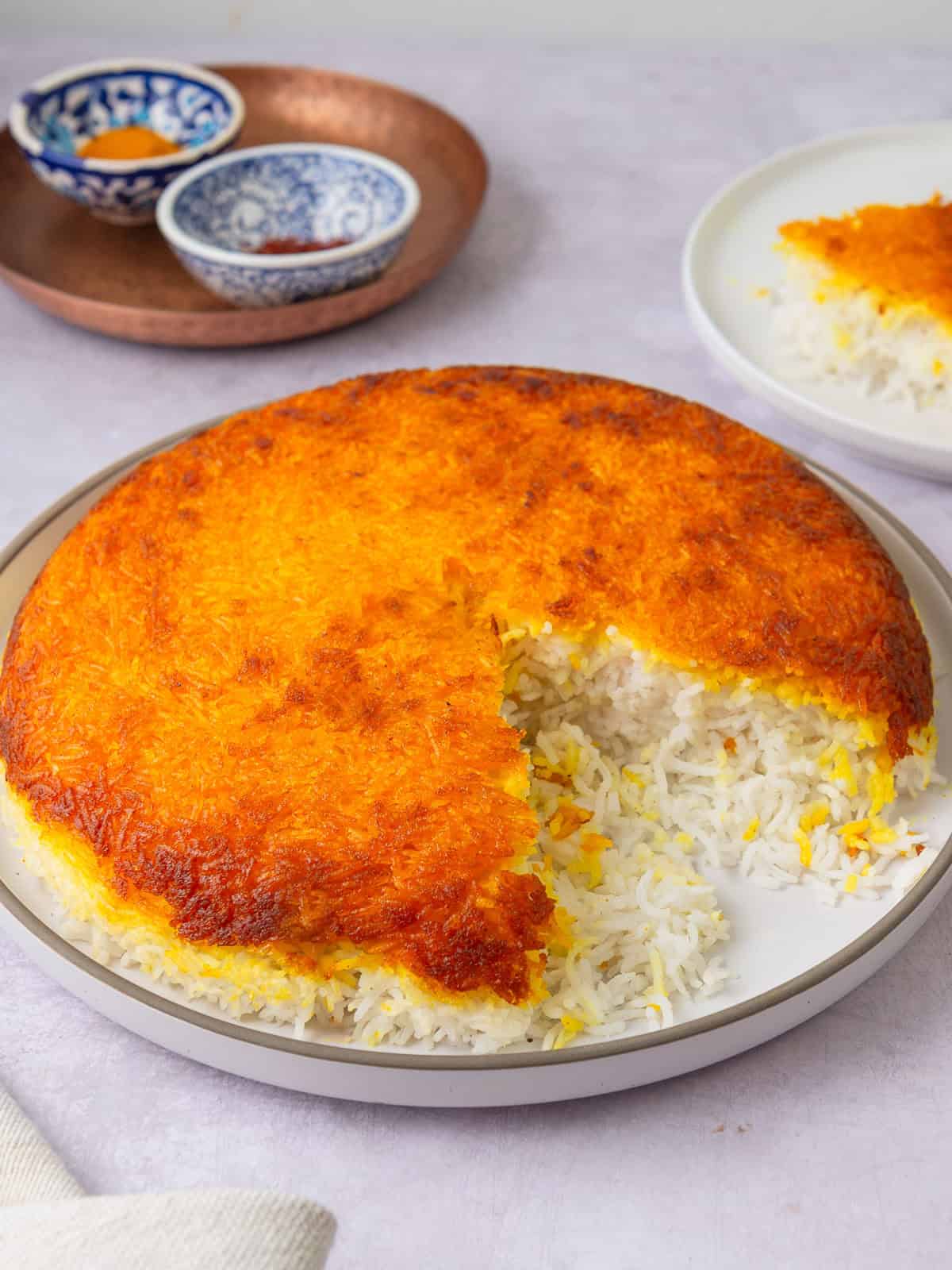
Learn how to make classic Persian rice called tahdig, famous for its golden, crispy bottom and fluffy grains.
This is one of the very first recipes I shared over 13 years ago, and it remains one of the most loved and visited recipes on my site. While I’ve refreshed the photos and clarified the steps, the heart of the recipe and the technique, remains exactly the same.
Jump to:
About This Recipe
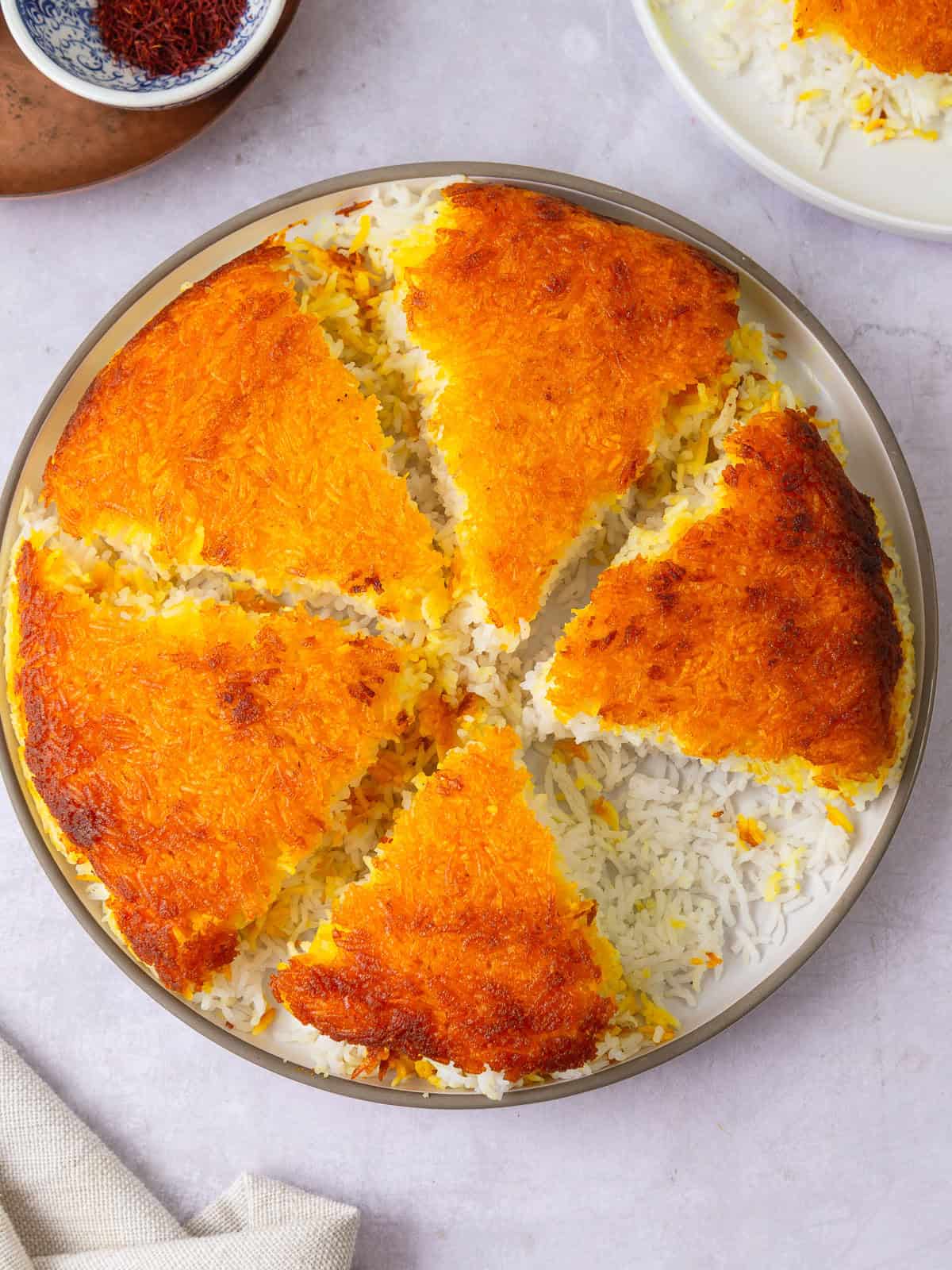
Tahdig is a classic Persian rice dish known for its crispy, golden bottom, which is often considered the best part of the meal.
The word tahdig literally translates to “bottom of the pot,” which is exactly where the magic happens. As the rice steams, a deeply golden, crunchy layer forms underneath, flavored with saffron and turmeric. The better your tahdig, the more praise it earns, and yes, it’s often the first thing to disappear from the table.
This recipe uses just four ingredients, but it’s more about technique than complexity. Once you understand the method, tahdig becomes a celebratory dish that’s incredibly rewarding to make.
📋 Ingredients
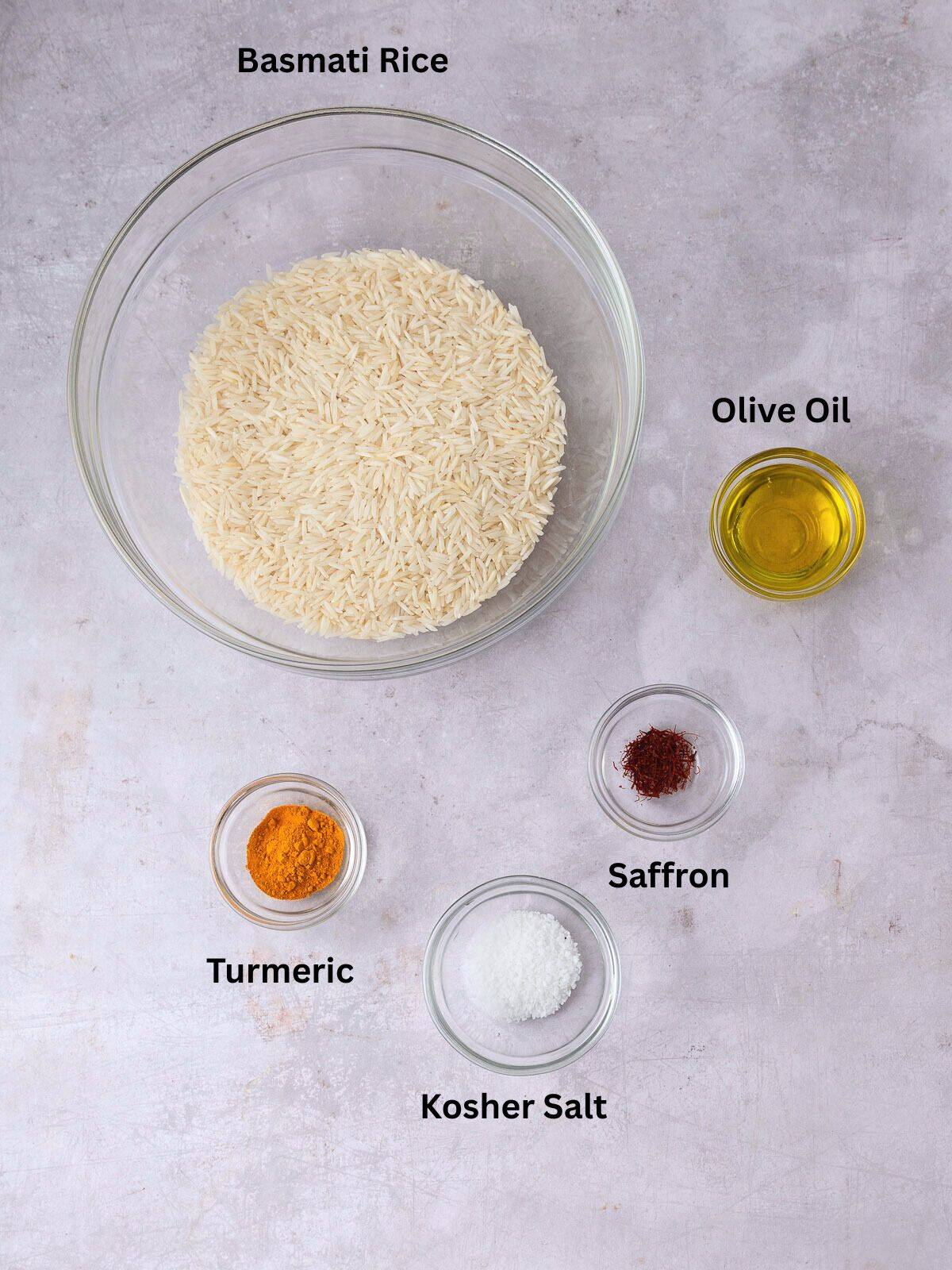
- Basmati Rice: Use a high-quality long-grain basmati rice for the best results. This is the one recipe where quality truly matters because not all rice is created equal. I love India Gate basmati, which gives beautiful, fluffy results every time.
- Saffron: A little goes a long way and even a small amount will last you a while. Choose good-quality saffron with deep red threads and a strong aroma. Bloom the saffron in warm water so it extracts both color and flavor, ensuring every thread is utilized.
- Olive Oil: Use a neutral, good-tasting olive oil. It doesn't have to be overly peppery or robust, just something clean that will help create a crispy bottom.
- Turmeric: This is my addition for a deeper golden hue and subtle warmth. You can leave it out and use only saffron.
See recipe card for full information on ingredients and quantities.
🍋 Tahdig Variations
- Potato Tahdig: Add thinly sliced potatoes to the bottom for an extra crunchy crust.
- Lavash Tahdig: Add a thin layer of lavash flatbread to create a chip-like layer.
- Jeweled Rice with Tahdig: Layer the rice with dried fruit and nuts. This one is always a showstopper!
⏲️ How to Make Tahdig (Step by Step)
Preparing the Rice
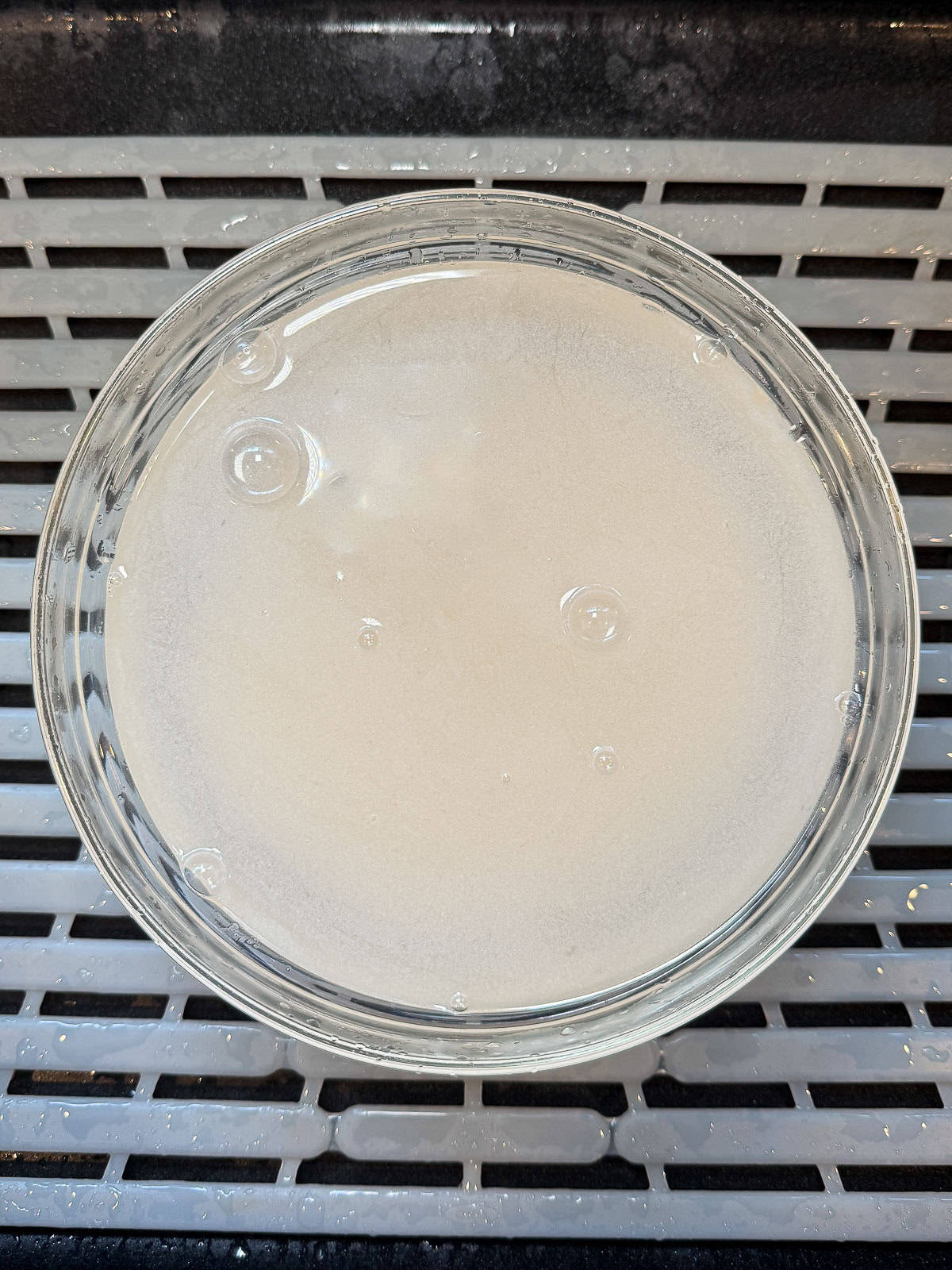
Rinse the Rice: Rinse the basmati rice in a large bowl with cold water. The water will look very cloudy at first.
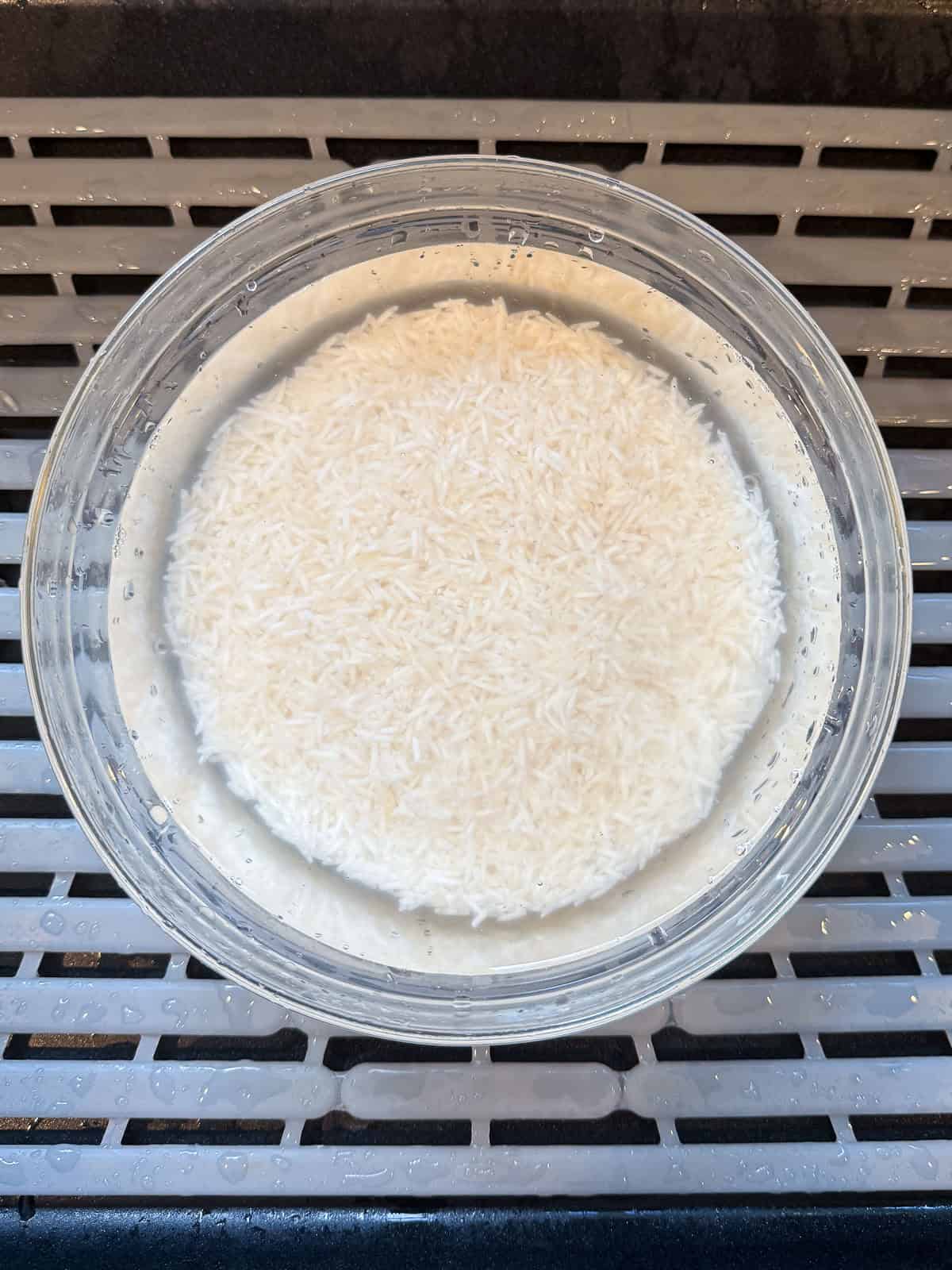
Rinse Until the Water is Clear: Continue rinsing several times until the water is very clear. This step is essential for light, fluffy rice. Soak rice in salted water for 20 minutes.
Parboiling the Rice
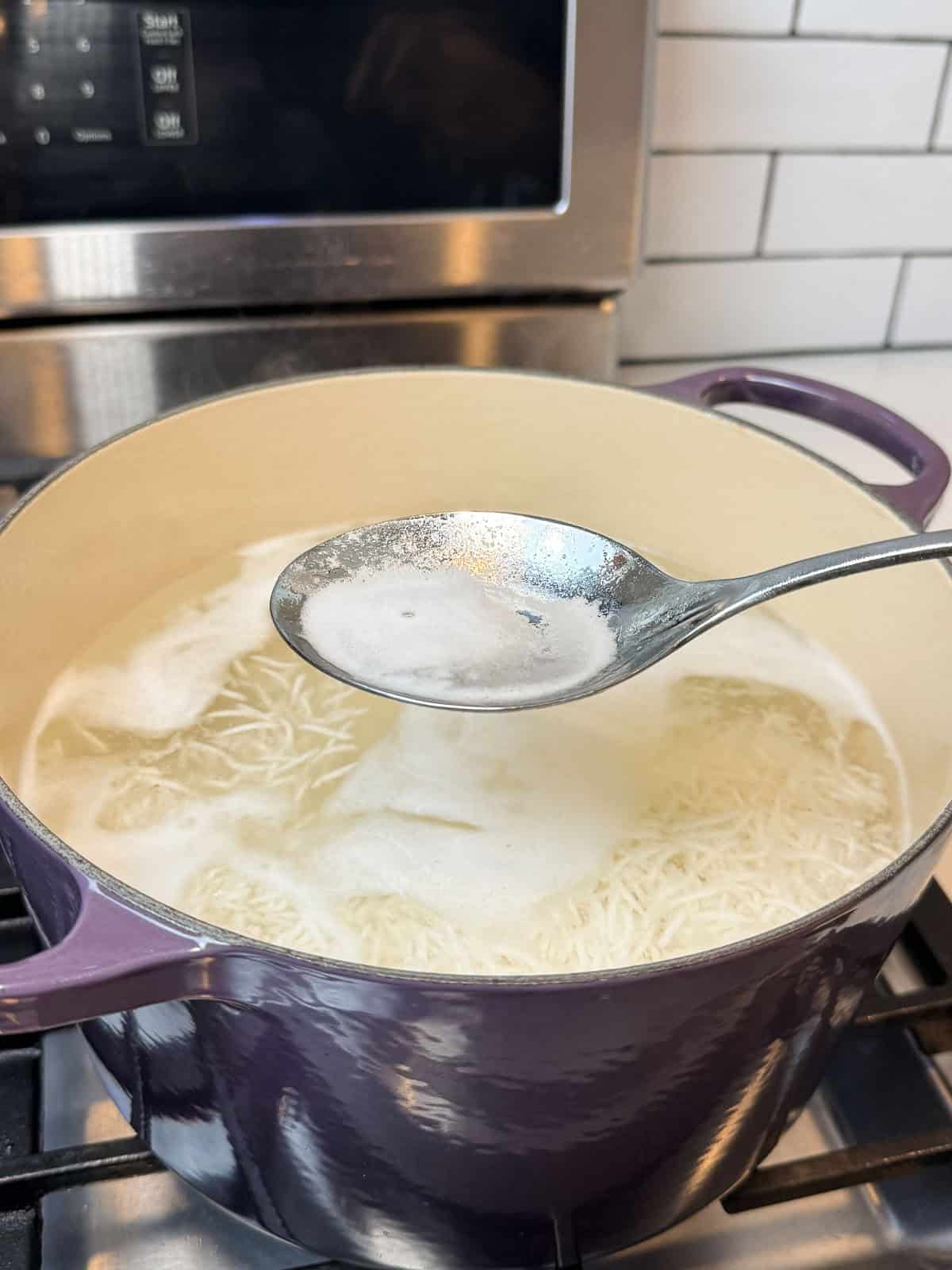
Parboil the Rice: Boil rice for 7-8 minutes. Skim off any foam that rises to the surface.
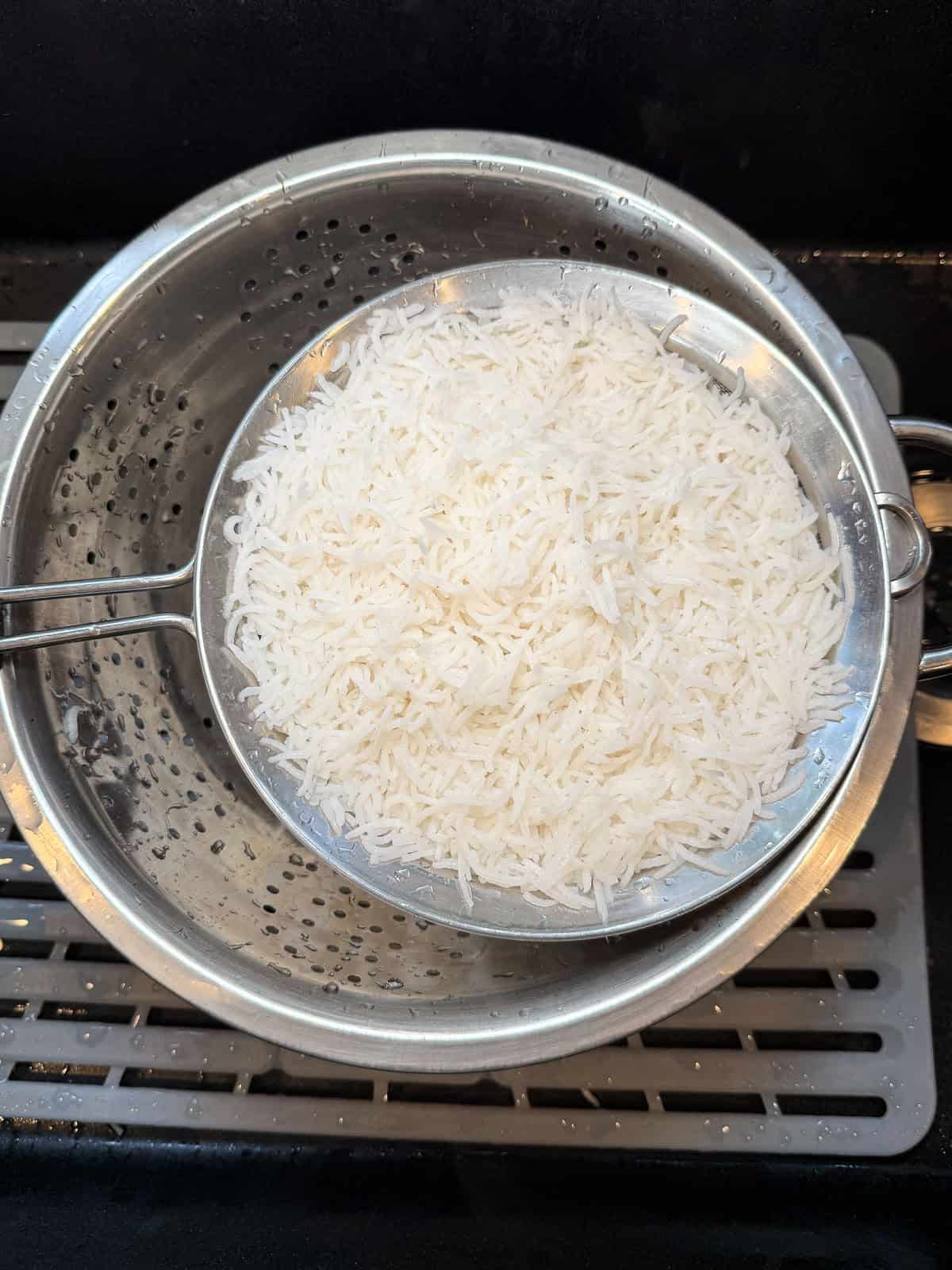
Drain the Rice: After parboiling, the rice should be tender on the outside and firm on the inside. Drain and rinse with cold water to stop the cooking process.
Make the Tahdig
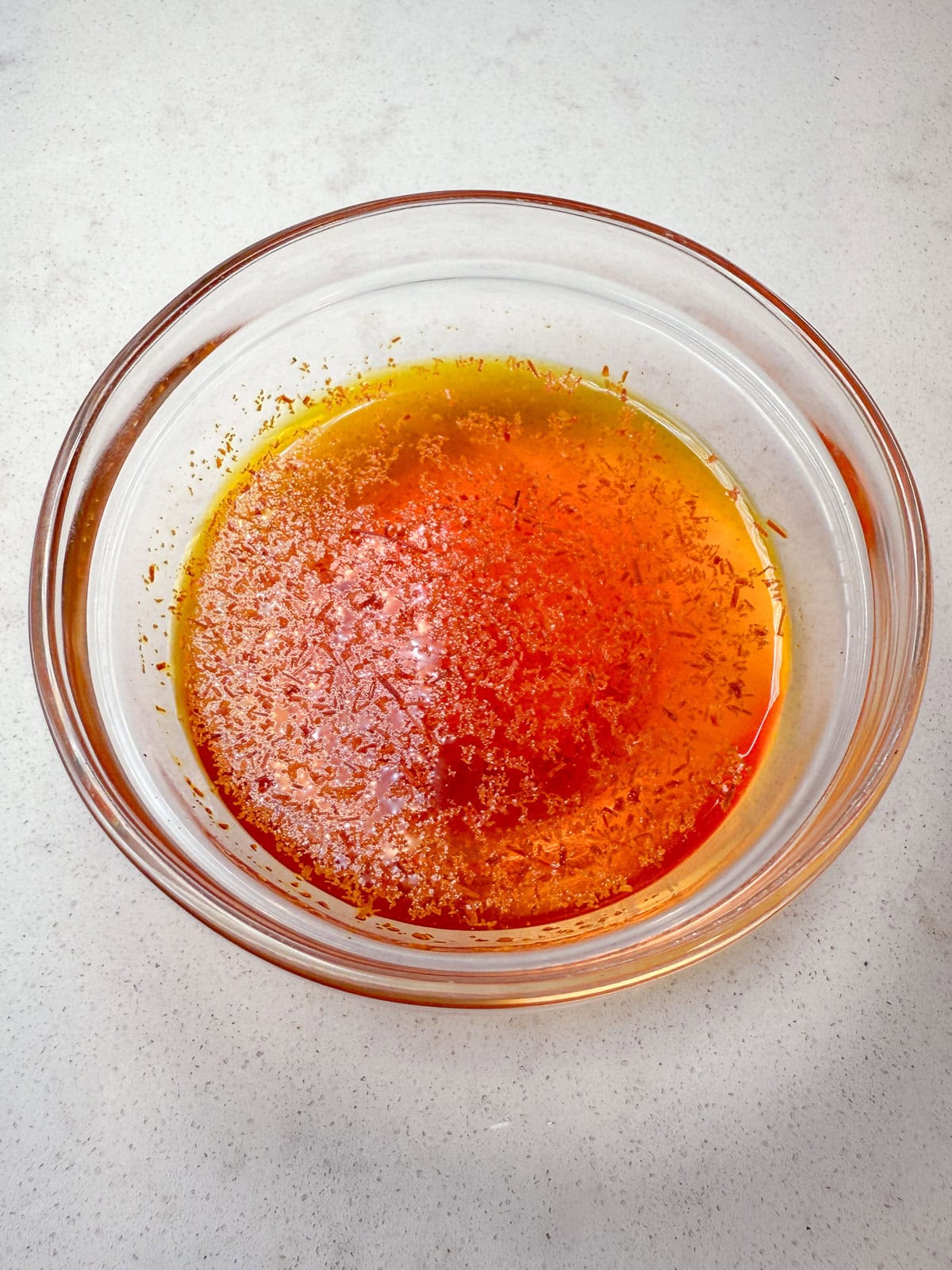
Bloom the Saffron: Crush the saffron and add to a few tablespoons of warm water. Let it steep for a few minutes.
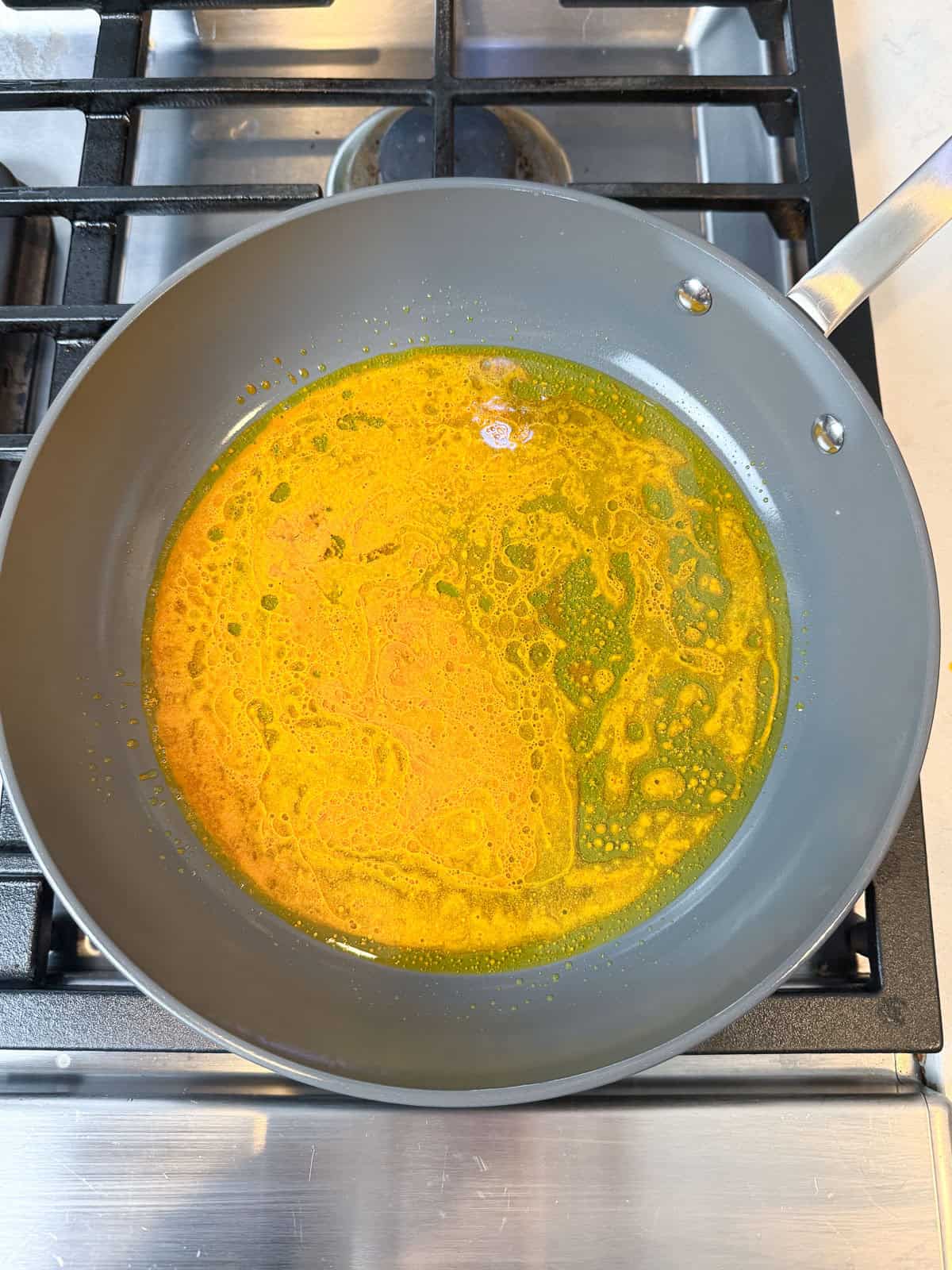
Create the Tahdig Base: Heat olive oil in a non-stick skillet and add saffron water and turmeric. Swirl gently to evenly coat the bottom.
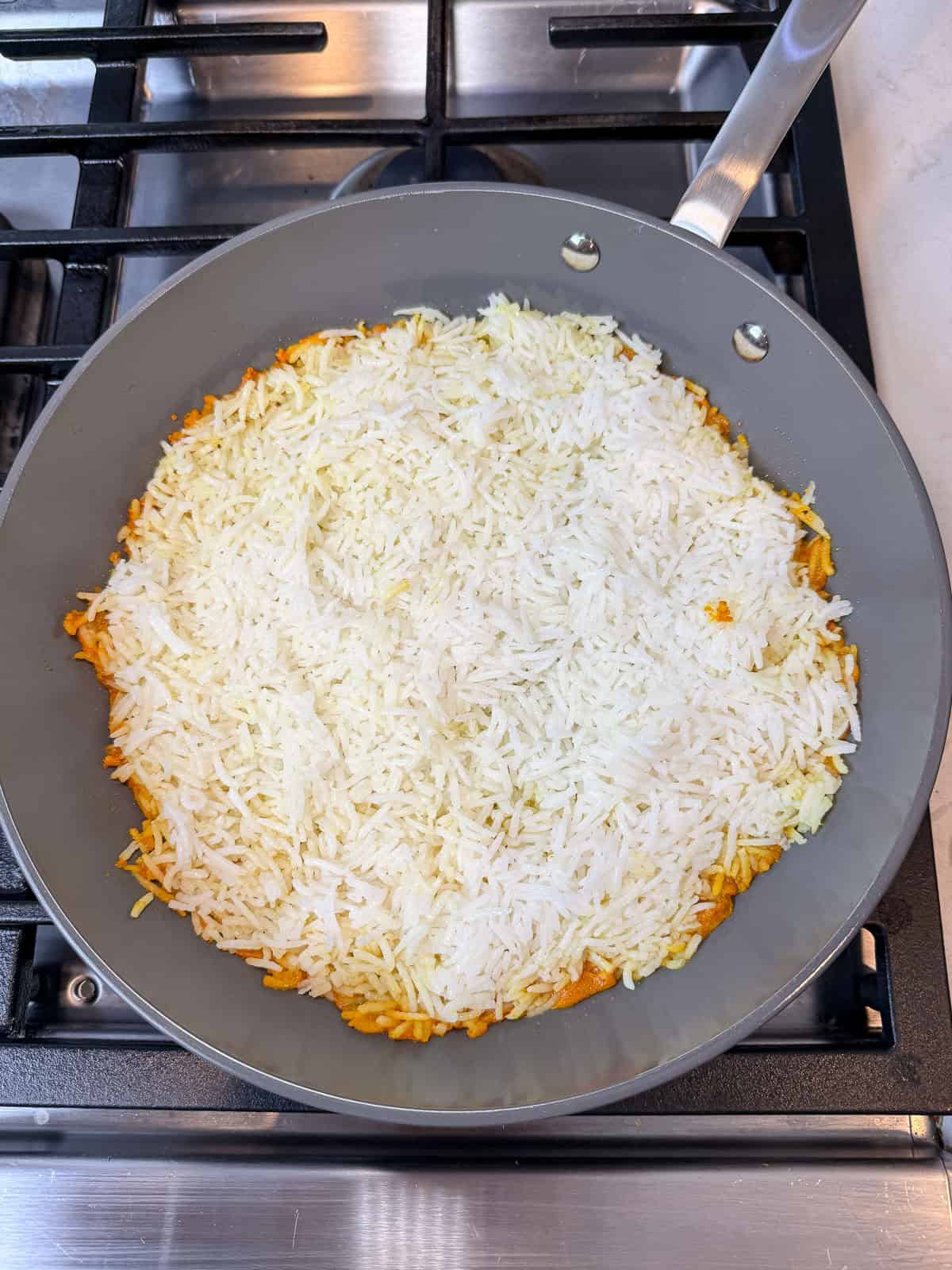
Form the Crispy Layer: Spoon a layer of rice directly onto the saffron mixture. This first layer will become the crispy tahdig.
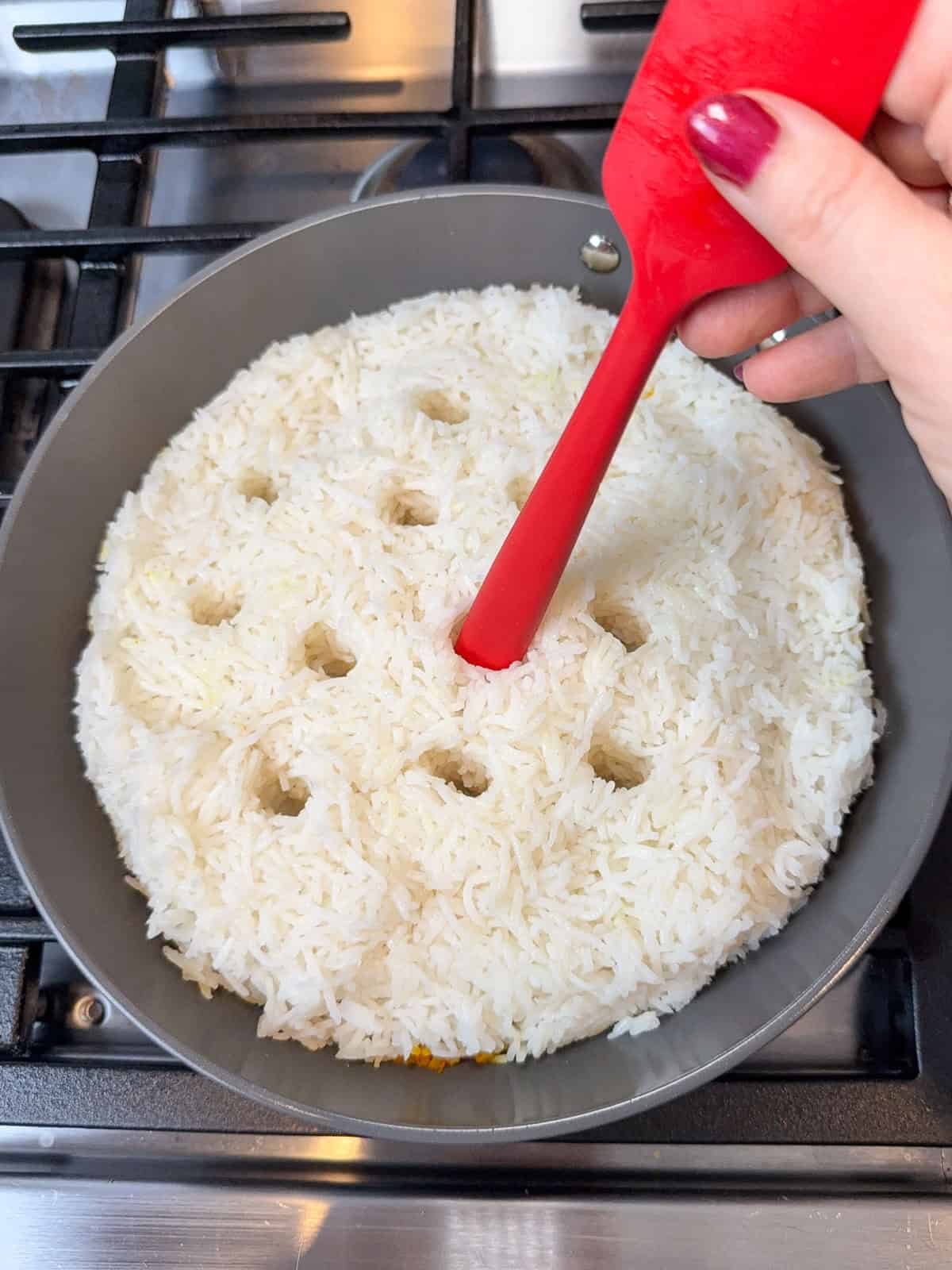
Layer the Rice: Add remaining rice on top. Use the handle of a spatula to poke a few holes into the rice, this allows steam to escape.
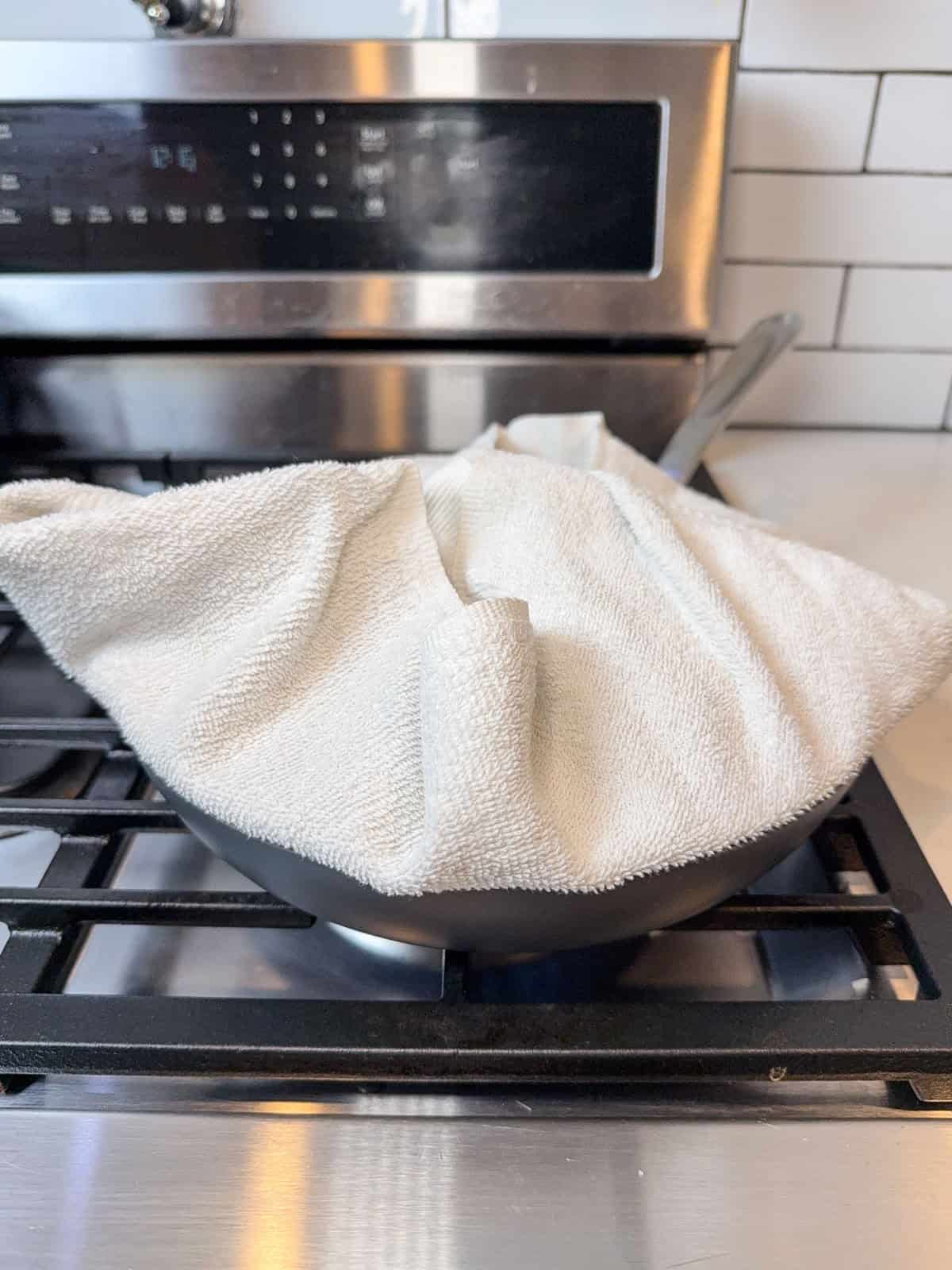
Cook the Rice: Wrap the lid with a clean kitchen towel and cover the rice. Cook for about 30 minutes, or until you hear gentle crackling sounds.
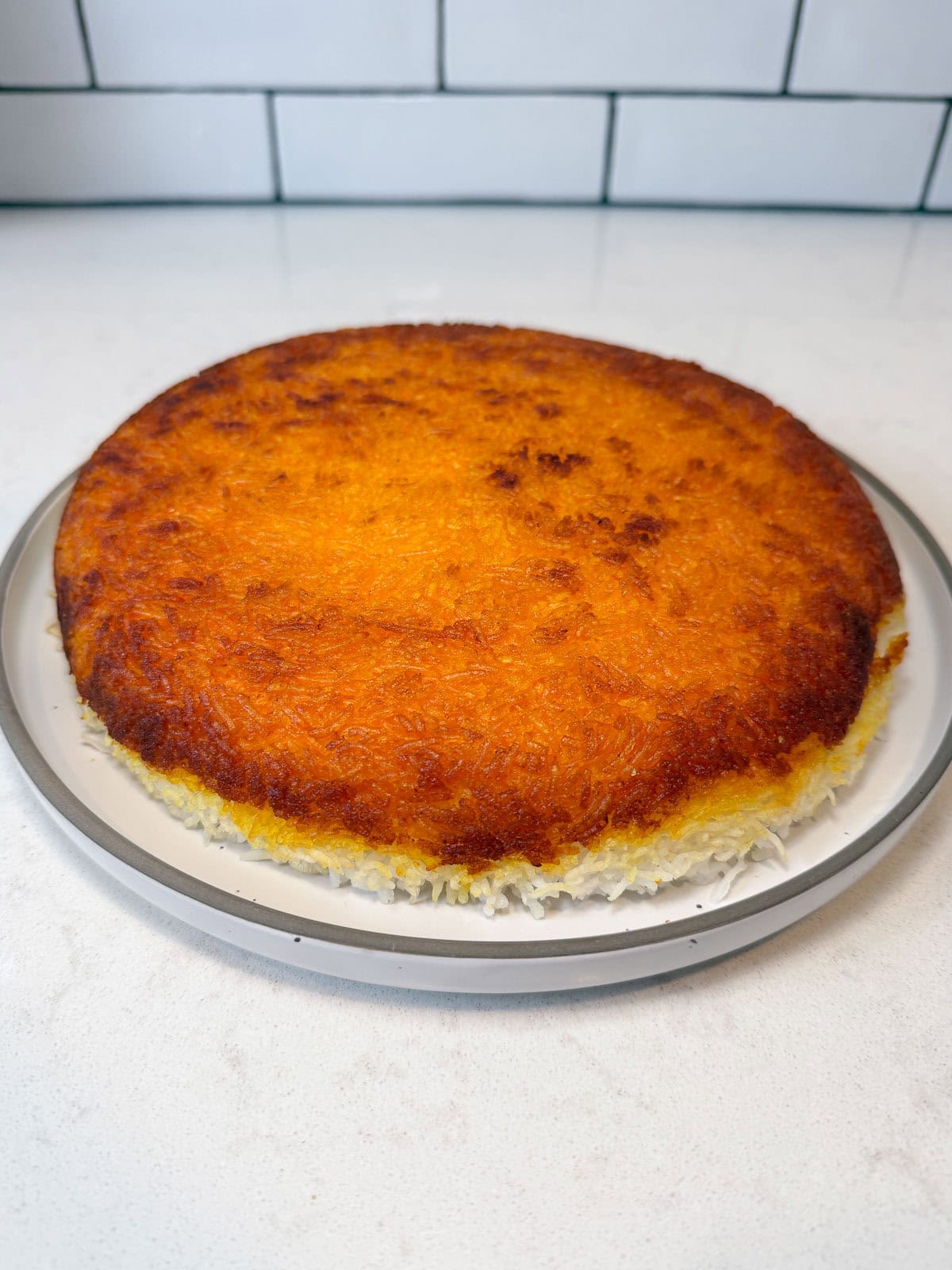
Flip and Serve: Once fully cooked, invert the pan onto a serving plate so the crispy bottom is revealed on top. The tahdig should release easily.
📍 Recipe Tips for Perfect Tahdig
- Rinse the Rice Well: Rinse the rice several times until the water is completely clear. This removes excess starch and is key to fluffy, separate grains.
- Soak the Rice: After rinsing, soak the rice in salted water, which both seasons the rice and improves the final outcome.
- Don't Skip Parboiling: This gives the rice a head start. Set a timer and check the grains, they should be tender on the outside and still firm in the center.
- Use a Non-stick Skillet for Best Results: This makes flipping the tahdig much easier and helps the crispy layer release cleanly.
- Listen for the Crackle: As the rice cooks, you should hear sizzling and crackling, a sign that the tahdig is forming. If you smell burning, lower the heat.
- Stove Temperatures Vary: Tahdig is a technique-focused dish and every stove runs a little differently, so trust your senses. Use the timing as a guide and adjust as needed.
Serving Suggestions
Tahdig is traditionally served alongside flavorful stews, braises and roasted meats. Its golden, crispy bottom and fragrant rice pair beautifully with bold Mediterranean and Middle Eastern dishes. Here are a few favorites.
- Chicken Tagine with Olives and Preserved Lemon
- Greek Braised Lamb Shanks
- Braised Chicken with Dates and Saffron
- Herb Crusted Salmon
- Slow-cooked Lamb Shawarma
More Great Rice Recipes

Love this recipe? Please leave a 5-star 🌟🌟🌟🌟🌟rating in the recipe card below & a review in the comments section further down the page.

Tahdig (Persian Rice with Crispy Bottom)
LittleFerraroKitchen.com
Ingredients
- 2 cups basmati rice
- 1 large pinch saffron threads
- 3 tablespoons olive oil
- 1 teaspoon ground turmeric
- Salt for soaking and boiling
Instructions
- Rinse and Soak the Rice. In a large bowl, rinse the rice several times until the water runs completely clear.
- Fill the bowl with fresh water, add a generous pinch of salt, and let the rice soak for about 20 minutes while you bring a pot of water to a boil.*Reserve 3 tablespoons of hot water for blooming the saffron.
- Parboil the Rice. Bring a large pot of generously salted water to a boil. Drain the rice and add it to the boiling water.
- Cook uncovered on medium-high heat for 7–8 minutes, skimming off any foam that rises to the surface.
- The rice should be tender on the outside but still firm in the center. Drain and rinse briefly under cold water to stop the cooking.
- Prepare the Saffron. Crush the saffron threads using a mortar and pestle (if needed). Add to the reserved hot water and let bloom for a few minutes.
- Create the Tahdig. Heat a 10–12 inch nonstick skillet over medium heat. Add olive oil, bloomed saffron water, and turmeric, swirling to evenly coat the bottom of the pan.
- Spoon a thin, even layer of rice directly onto the saffron mixture, this will become the crispy tahdig layer.
- Add the remaining rice on top, forming a gentle mound. Use the handle of a spoon or spatula to poke a few holes into the rice to allow steam to escape.
- Steam and Cook. Wrap the skillet lid with a clean kitchen towel and cover the rice. Cook on medium to medium-high heat for about 30–35 minutes, or until you hear gentle crackling sounds.*If your stove runs hot, reduce the heat slightly.
- Flip and Serve. Remove the lid and place a serving plate over the skillet. Carefully invert to release the rice, revealing the golden, crispy tahdig on top.
- Alternatively, spoon out the rice and break the tahdig into pieces to serve alongside.
Notes
- Rinse the rice thoroughly until the water runs completely clear to remove excess starch and ensure fluffy, separate grains.
- Parboil the rice just until tender on the outside but still firm in the center, set a timer for 7-8 minutes.
- Use a 10–12 inch nonstick skillet, this makes flipping the tahdig much easier. As the rice cooks, listen for gentle sizzling and crackling.
- If you smell burning, lower the heat slightly, stove temperatures vary, so trust your senses.

Gina Abernathy says
This dish sounds amazing and the crispy bottom sounds wonderful.
Real Review says
There are multiple ways to do persian rice. Traditionally it's a little bit different but this one looks as just as fine. Notice that tahdig is not a name for the persian rice - tahdig is just a word for the "crispy top" - or bottom, not for the rice itself.
Enjoy your meals! 🙂
ashok says
My Family Loved it. I am definitely sharing Guys, Thanks For sharing this Great Recipe. this recipe and this website with my friend. Hope they also love it. Thank you again for sharing such a great recipe.
Lisa says
This was an easy and great tasting dish ! Perfect instructions and thanks for posting. It brought back memories of a wonderful Persian friend who first introduced me to this dish.
Marjorie says
Came out pretty flavorless. Disappointing.
Samantha says
Hi Marjorie...sorry to hear that! Did you salt the water and what style of rice did you use? Would love to help troubleshoot.
Thomas James says
Look yummy! One of my favorite Tah-Dig, nice to see your recipe, easy to follow, will cook this for family this weekend. Thanks you!
Helga says
I followed your recipe exactly and the rice did not cook. I thought “8 minutes exactly sounds really short”. But I have never made this dish so I trusted this recipe. I was correct. Your recipe is wrong. The rice needs AT LEAST 15 minutes to cook in water before drain and transfer to pan. My dish is ruined and I am furious.
Samantha says
Hi Helga..apologies for the late reply. I would love to help troubleshoot the recipe with you, if you'd like. Did you do the double cooking as well? After you drain it, put it back in the pot? And did you test the rice as it was cooking in the water? Happy to help if you'd like to make it again.
Jenna says
This looks great! Thanks.
Williams Chris says
Tah-Dig is great! To be honest, I'm not good at cooking but I like them, they give me joy and excitement every time I finish the dishes, which is a great thing. With your recipe, just need to follow the instructions and the rest is simple, thank you for sharing them.
EL Mehdi says
I tricked the kids that it was a cake ahaha it took them few bites to realize the truth
BTW, great recipe it's delicious <3
Olga says
Samantha, bravo! What a great idea! Love this. I’m sure this is incredibly delicious!
Alyssa says
Samantha, this looks really good! I think I need to make these for myself and the kids. Love this idea!
Samantha says
Thanks Alyssa!!
Christine Foss says
It turned out great-all I did was adjust the time and heat because my stove runs hot, and added some melted butter around the pan edges and into the holes. I might bloom the saffron in a little rosewater next time. I'm floored that a Persian person doesn't think of turmeric and saffron as very Persian ingredients - perhaps there is a region that doesn't use them, I think of them as ubiquitous in Persian cuisine! FYI - I would never use Jasmine - seems like blaspheme.
Samantha says
Oh the rose water sounds lovely!! I have not used rosewater in rice dishes yet! So glad it turned out well!!
Christine Foss says
I've been struggling to make this - will try your method, though I know med-high is too high for the 35 minute portion of the cooking. Also, it says "jasmine" in your ingredient list, but I think that basmati is the only way to go.
Samantha says
Hi Christine! Yes you are totally correct, basmati is the way to go and the way I make it. (I had that in my instructions but not ingredients, sorry about that). Also, I have a disclaimer on the bottom mentioning heat levels. When I made this my stove wasn't as strong so I did med09m-high. I have since moved and have a range now which is much more powerful...but I would definitely do medium to get it hot. Please share the results when you make it 🙂
Ivana says
Shouldn't this recipe be using basmati rice? Never had Tah Dig with jasmice rice before.
Samantha says
I have tried it with both and both are delicious!