

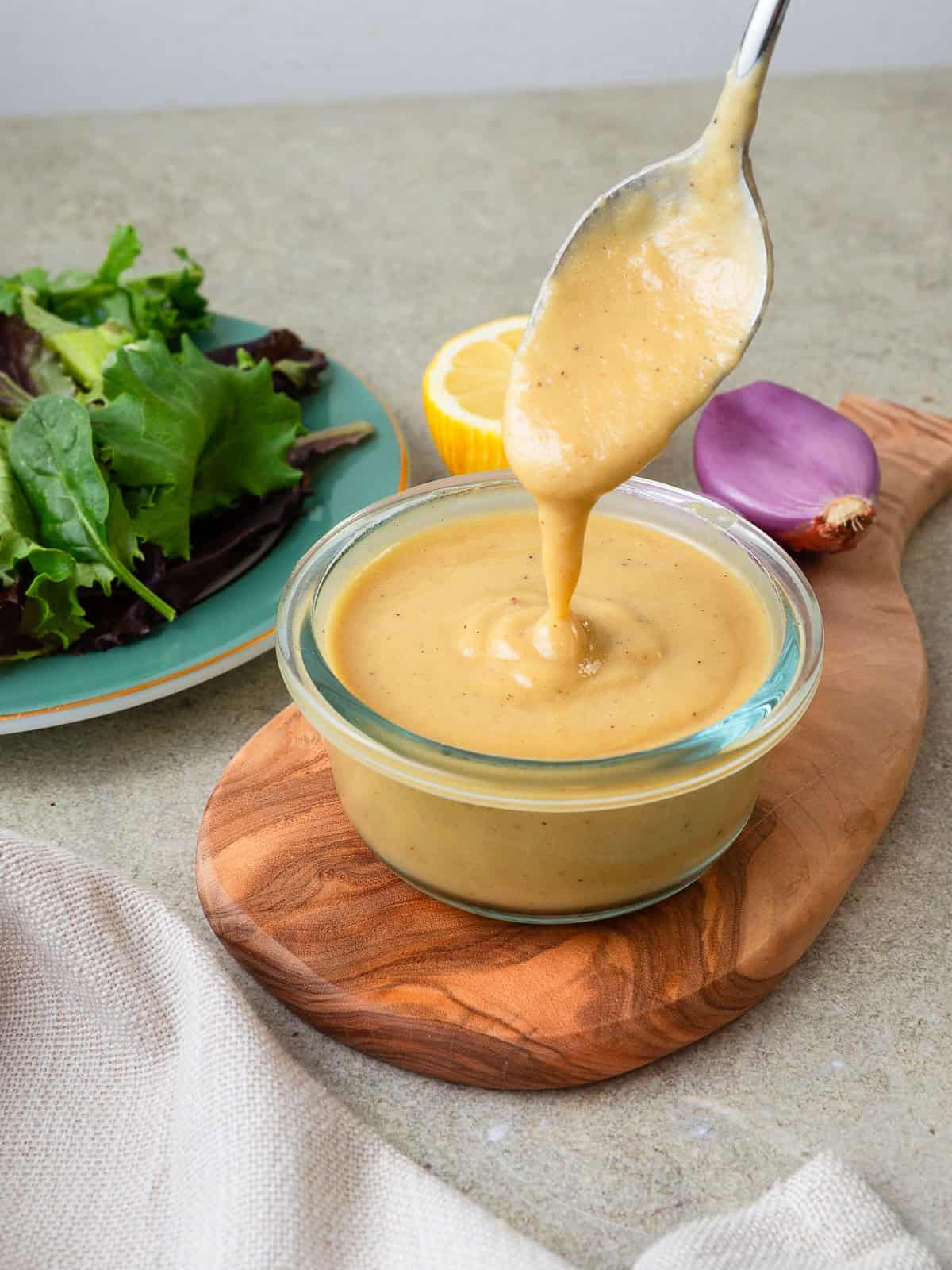
This creamy caramelized shallot vinaigrette is tangy, savory, slightly sweet. You'll want to put it on everything! Drizzle it over salads, roasted vegetables, crispy potatoes, or just use it as a sauce for your favorite proteins.
Jump to:
About This Recipe
If you're looking for a vinaigrette that goes beyond the usual oil and vinegar combination, this caramelized shallot vinaigrette is it!
The boost of flavor comes from the caramelized shallots. Instead of using them raw, they're gently sautéed with garlic in olive oil until soft, golden and lightly caramelized around the edges, bringing out another layer of depth and natural sweetness.
Once the shallots and garlic are caramelized, everything goes in the blender with white wine vinegar, fresh lemon juice, Dijon mustard and honey. The mixture becomes thick and creamy with the perfect balance of tang and sweetness.
Drizzle the creamy shallot vinaigrette over roasted vegetables like asparagus or broccolini, or use it as a dressing for a salad. This would also be fabulous tossed with grilled potato salad.
📋 Ingredients
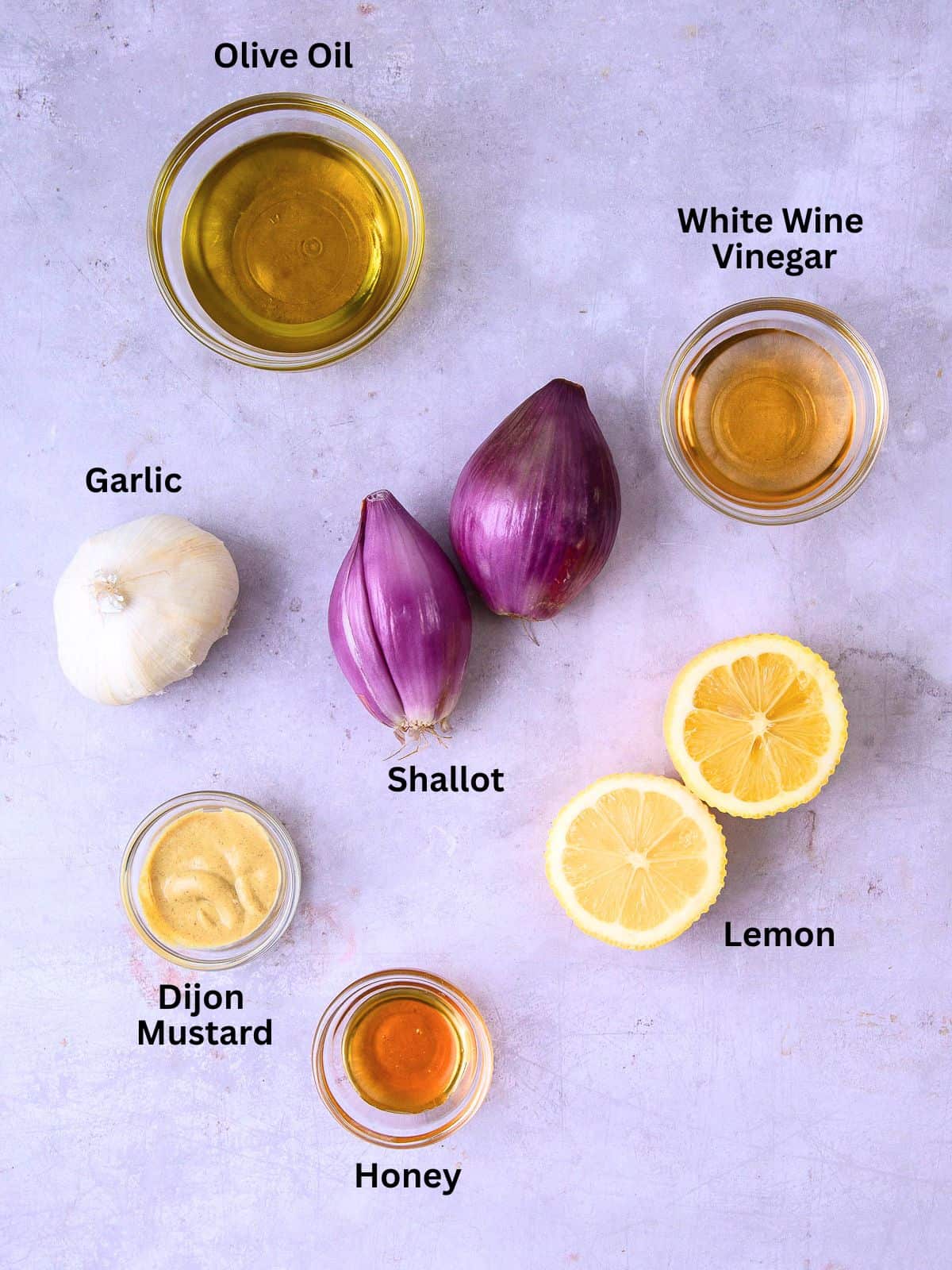
- Shallots: Look for firm shallots with smooth, dry skins and no soft spots or blemishes.
- Garlic: Choose garlic bulbs that are firm with tight cloves and no soft or shriveled spots. A few cloves add savory depth without overpowering the shallots.
- Olive Oil: Use a good-quality extra-virgin olive oil to caramelize the shallots and garlic, which will all be used in the vinaigrette.
- White Wine Vinegar: White wine vinegar keeps the vinaigrette bright and tangy without overpowering the sweetness of the caramelized shallots. Red wine vinegar or champagne vinegar can also be used.
- Dijon Mustard: Dijon is a classic addition to vinaigrettes and adds a little punch and savory depth while also helping emulsify the vinaigrette into a creamy dressing.
- Lemon Juice: Fresh lemon juice adds another layer of bright acidity. For even more lemon flavor, add a little lemon zest to the mixture before blending.
- Honey: Honey balances the acidity from the vinegar and lemon juice and rounds out the vinaigrette.
See recipe card for full information on ingredients and quantities.
🍋 Substitutions and Variations
- Swap the Shallots: If you don't have shallots, substitute with red onion or a sweet onion such as Maui or Vidalia.
- Try a Different Vinegar: Champagne vinegar or red wine vinegar would also work well. Balsamic vinegar can be used for a sweeter, richer version, although it will make the dressing darker.
- Use a Different Sweetener: If honey isn’t available, or to make this completely vegan, substitute with agave or ½ to 1 teaspoon of sugar. Start with a small amount and adjust to taste.
- Add Fresh Herbs: For a fresh variation, add finely chopped fresh herbs, such as tarragon, chives, parsley, or thyme. Stir the herbs in after blending so they stay fresh and visible.
⏲️ Instructions
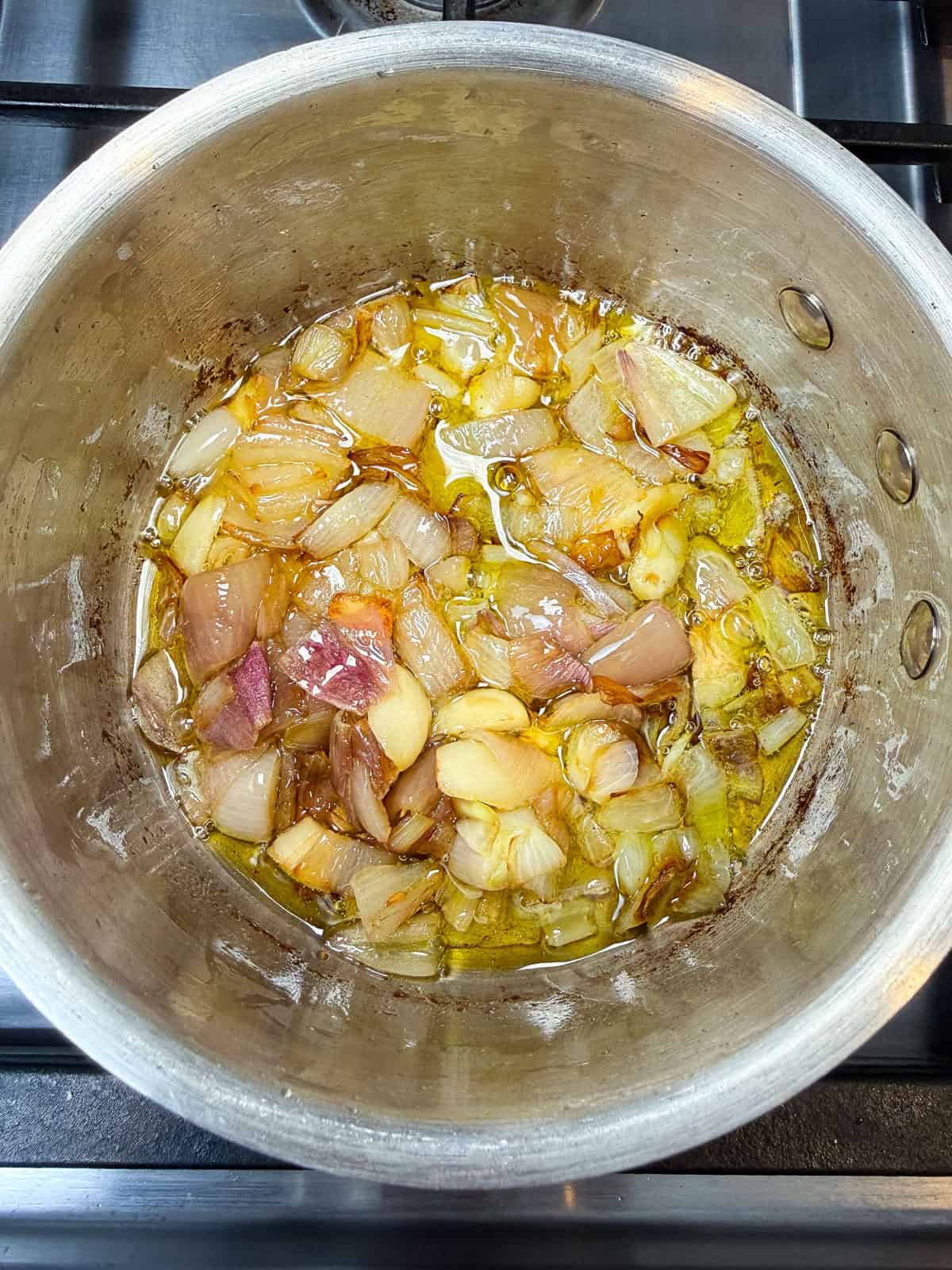
Caramelize the Shallots and Garlic. Saute the chopped shallots and garlic in olive oil over medium heat until lightly golden and caramelized around the edges. Remove from the heat and let cool slightly.
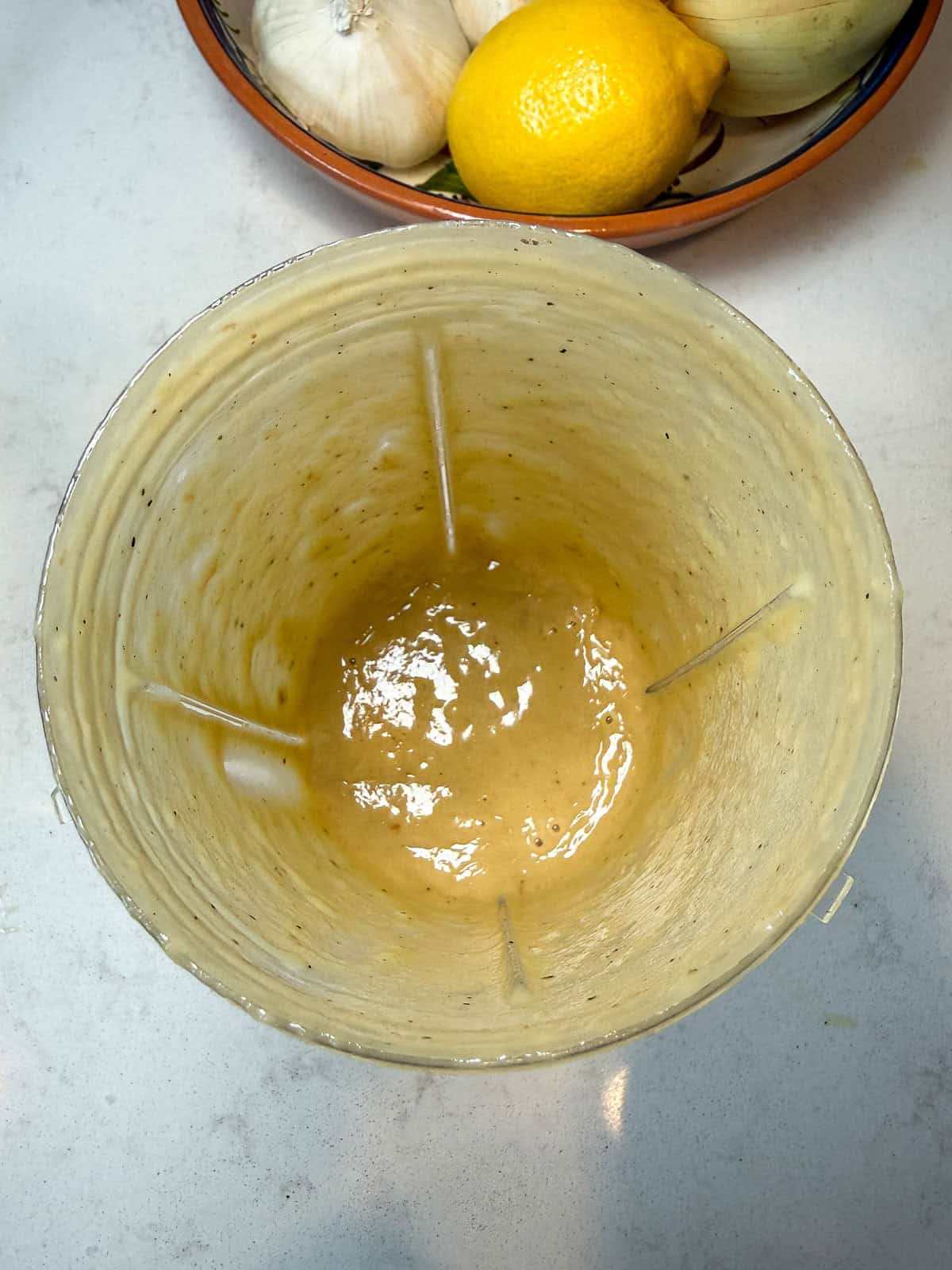
Blend the Vinaigrette. Add the shallot mixture to a blender with the vinegar, lemon juice, Dijon, honey, salt and pepper. Blend until smooth and creamy.
📍 Recipe Tips
- Don't Over-Caramelize the Shallots: You want the shallots and garlic to become soft and lightly golden with browned edges, not deeply charred. Keep an eye on them and stir occasionally as they cook.
- Let the Shallots Cool Slightly: After sautéing, let the shallots and garlic cool for a few minutes before blending. You don't want to add very hot oil directly into the blender.
- Taste and Adjust: Vinaigrettes are all about balance, and everyone's preference is a little different. Once blended, taste and adjust with a little more honey, vinegar, lemon juice, salt, or olive oil as needed.
- Adjust the Consistency: The finished vinaigrette should be thick and creamy and evenly coat the back of a spoon. If it's too thick, add a splash of water or a little more olive oil and blend again.
- Storage: Store the vinaigrette in an airtight container in the refrigerator for up to 5 days. The dressing will thicken as it chills, so let it sit at room temperature for 20–30 minutes and stir well before serving.
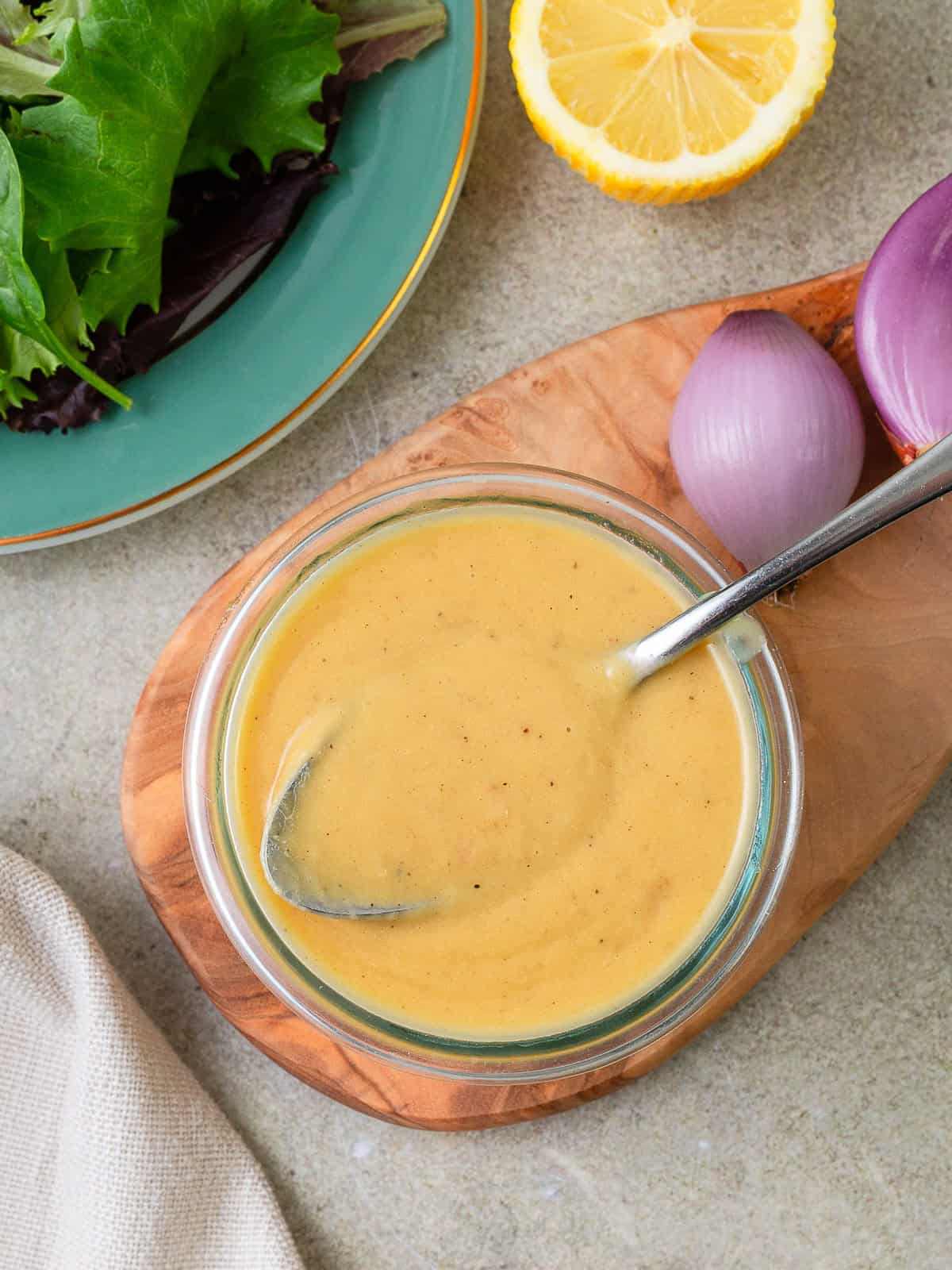
Serving Suggestions
- Drizzle Over Roasted Vegetables: This shallot vinaigrette is especially good with roasted asparagus, broccolini, Brussels sprouts, carrots, or cauliflower.
- Dress a Simple Salad: Use it as an everyday salad dressing with mixed greens or toss it with a chopped kale salad with a little feta or goat cheese.
- Spoon Over Potatoes: Drizzle it over roasted potatoes or use it as a sauce for crispy potatoes. It would also be fantastic tossed into a grilled potato salad.
- Serve With Chicken: The bright acidity works beautifully with grilled or roasted chicken and can be used as both a dressing and a sauce.
- Drizzle over Grain Bowla: Drizzle it over farro, lemony couscous salad, or another favorite grain with roasted vegetables and fresh herbs for an easy meal.
More Dressings and Dips to Try
Caramelized Shallot Vinaigrette
LittleFerraroKitchen.com
Equipment
Ingredients
- 2 medium shallots roughly chopped
- 3 garlic cloves roughly chopped
- ½ cup extra-virgin olive oil
- 2 tablespoons white wine vinegar
- 1 tablespoon fresh lemon juice
- 2 teaspoons Dijon mustard
- 2 teaspoons honey
- ½ teaspoon kosher salt or to taste
- ¼ teaspoon black pepper
Instructions
- Sauté the shallots and garlic in olive oil over medium heat for about 10 minutes, until soft and lightly caramelized around the edges.
- Let the shallots and garlic cool for a few minutes, then transfer them to a blender or food processor.
- Add the white wine vinegar, lemon juice, Dijon mustard, honey, salt, and pepper.
- Blend until completely smooth and creamy. Taste and adjust the seasoning, adding more vinegar for brightness or more honey for sweetness if desired.
- Store in an airtight container in the refrigerator for up to 5 days. Let the vinaigrette sit at room temperature for a few minutes and shake well before serving.
Notes
- For a looser vinaigrette, blend in 1–2 tablespoons of water.
- Champagne vinegar would be lovely here as well.
- Add a tablespoon of chopped fresh herbs such as parsley, dill, or tarragon for a fresh finish.
- Yields about ¾ cup vinaigrette total.
Leave a Reply